
Chapter 01
Safety first
The compounds in this book are useful because they are chemically busy. Busy chemicals do not forgive sloppy hands.
Most of the harm in a home chemical shelf is not mysterious. It is bleach meeting vinegar in a bucket. It is lye in aluminum. It is pool shock in a hot shed next to a bottle of oil. It is a child who can read the pretty jar but not the hazard line.
The five standing orders
- ▸One job, one bottle. Never mix two cleaners, two disinfectants, or a cleaner with an acid ‘to make it stronger.’
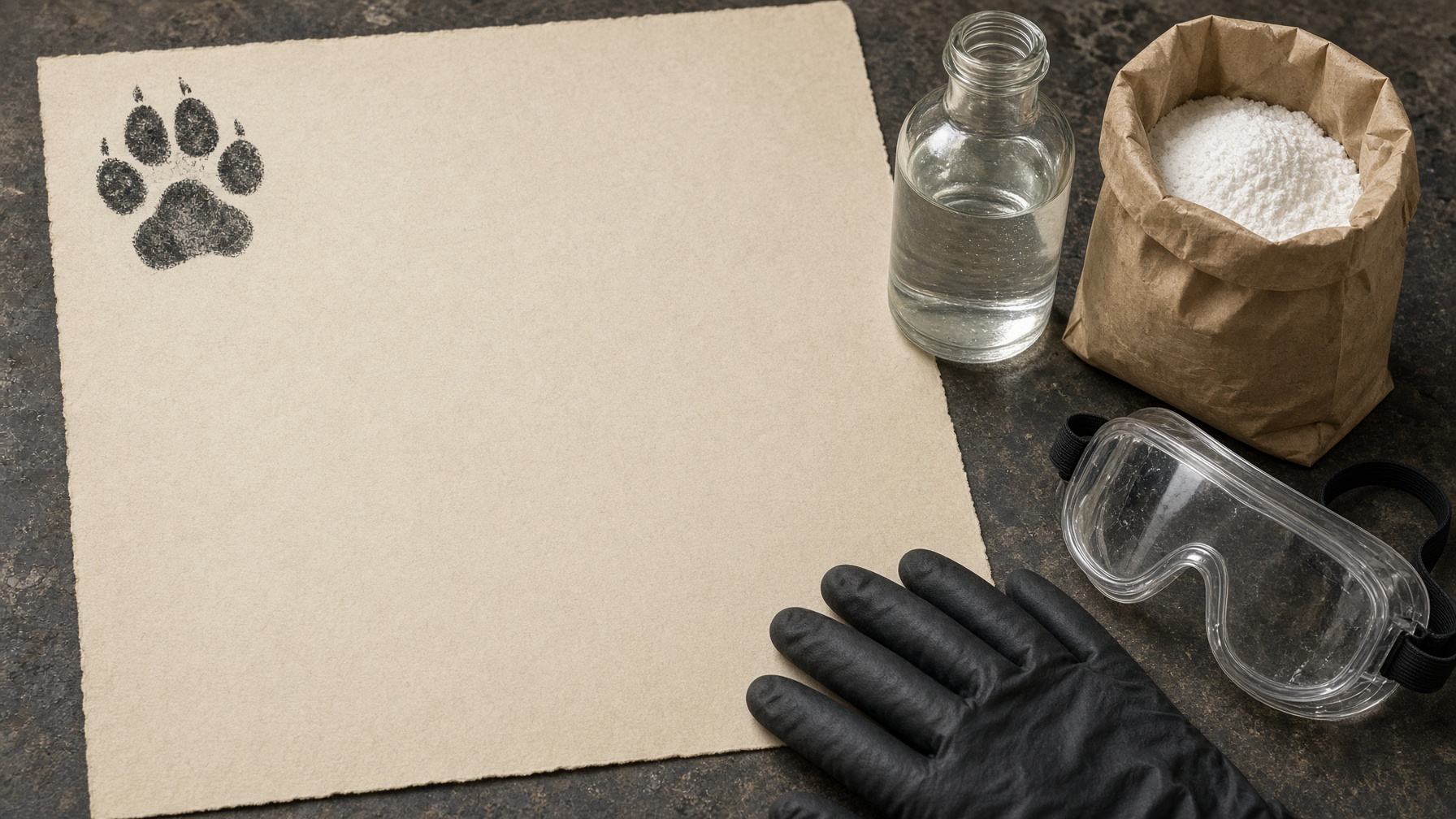
- ▸Gear up before the lid comes off. Goggles that seal, gloves that match the chemical, air you can actually breathe.
- ▸Add the dangerous thing to the water, not the water to the dangerous thing. This is the lye rule and it has saved skin.
- ▸A spill on skin or in eyes is running water for fifteen minutes, then medical care. Do not neutralize a chemical burn on a person with the opposite chemical. That reaction makes heat.
- ▸Label, date, and isolate. Oxidizers alone. Acids away from hypochlorites. Lye away from aluminum. Kids and pets locked out.
If it goes wrong
| Event | Do this | Do not |
|---|---|---|
| Splash in eyes | Flush with clean water 15+ minutes. Then emergency care. | Do not neutralize with vinegar or bicarb in the eye. |
| Skin contact, alkali or acid | Strip soaked cloth, flood with water 15+ minutes. | Do not ‘rub it in’ with the opposite chemical. |
| Chlorine or chloramine fumes | Get to fresh air. Shut the container if you can do it without a breath. Call 911 if breathing is hard. | Do not go back in to ‘finish the job.’ |
| Swallowed unknown powder | Poison Control: 1-800-222-1222 (U.S.). Bring the label. | Do not induce vomiting unless they tell you to. |
Keep a cheap spill kit on the same wall as the shelf: a box of baking soda (for acid spills on counters), a bottle of 5% vinegar (for alkali spills on counters), a stack of rags you can throw away, a pail of clean water, and the goggles. Surface neutralization is a countertop tactic. It is not first aid.