
Chapter 07
Food, salt, and the Wolf Den pantry
Calories you already own, water you can make safe, and the compounds that keep both from walking off.
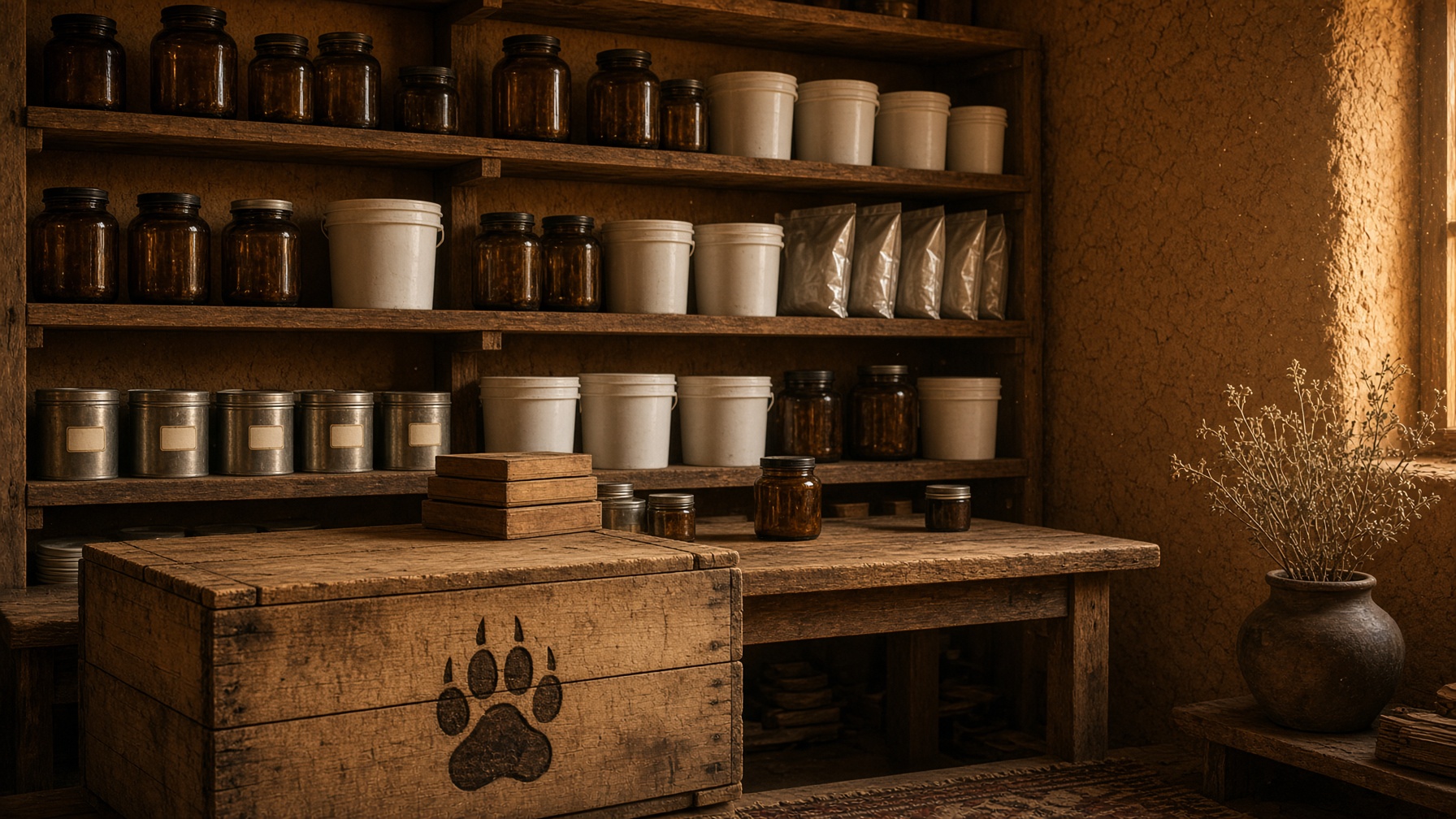
Wolf Den freeze-dried meals are real food, sealed for a long sit when you keep them cool, dry, and out of the sun. Shelf life is years, not a promise carved in the garage wall — follow the pouch. They still ask for water. A pallet of food with no water plan is a pile of dust. A water plan with no calories is a hard week. Own both. Start with 72 hours, then two weeks, then longer. The Survival Base Calories planner at plan.wolfdenfoods.com builds the shopping list from the current store.
Rehydration is a water budget
Read the pouch. Most freeze-dried meals want a cup or two of hot water per serving. In a den that is also treating ditch water, that cup has to come from the treated side of the operation — not from the bucket you have not dosed yet. Practice once on a Saturday so the first blackout is not a reading test.
Salt, acid, lime, honey
The old preservations still work because they are chemistry, not nostalgia. Salt pulls water out of meat and microbes. Vinegar and citric acid drop pH so the wrong bacteria cannot party. Food-grade lime waters eggs (water glassing) when you have a tested method and clean, unwashed eggs. Honey is a sugar fortress that does not spoil if you keep water out of it.
Use current, tested recipes for canning and curing — USDA and your state extension are not too proud to consult. A compound index is not a substitute for a tested process. Loose potassium nitrate from a stump can is not a ham recipe. Buy curing salt with a dose printed on it, and a scale.
Grain and the moth
Dry beans and grain in mylar, oxygen absorber sized to the container, bucket with a gasket. Food-grade DE as a mechanical assist if moths have already voted. Freeze a bag of flour for a few days when you bring it home if you have the freezer space — eggs die, then the pantry is quieter.